Subterranean termite treatment requires a rigorous diagnosis of the structural interface where soil meets framing. Eastern subterranean termites (Reticulitermes flavipes) enter structures through hairline foundation…
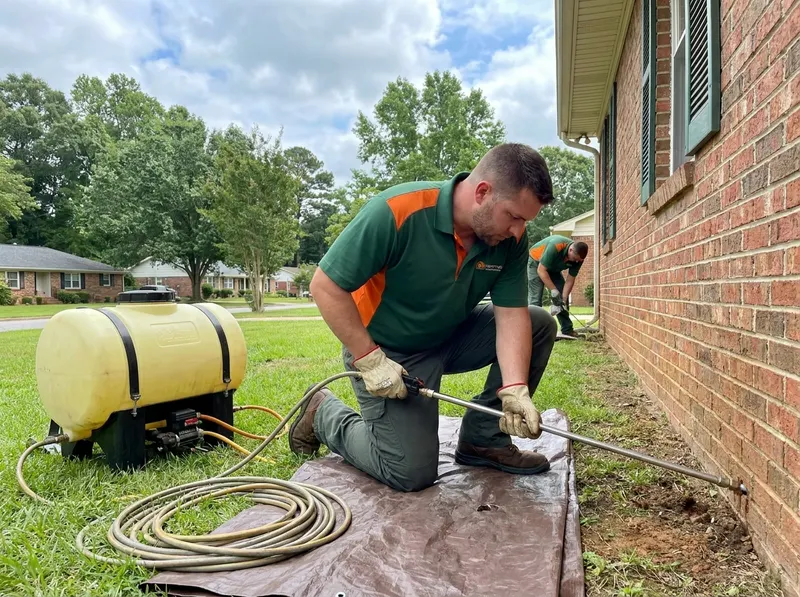
Subterranean termite treatment requires a rigorous diagnosis of the structural interface where soil meets framing. Eastern subterranean termites (Reticulitermes flavipes) enter structures through hairline foundation fractures as narrow as 0.8 millimeters, constructing protective shelter tubes to bridge exposed masonry. In historic stone foundations common across Hyde Park, Pendleton Heights, and Coleman Highlands, mortar deterioration creates uninhibited subterranean pathways into floor joists. Conversely, slab-on-grade construction in commercial and residential conversions across the Crossroads Arts District and River Market requires targeted sub-slab injection along expansion joints and plumbing penetrations, where subterranean colonies exploit hidden underslab voids.
Effective colony eradication relies on non-repellent liquid termiticides, such as fipronil, applied at 4 gallons per 10 linear feet into backfilled foundation trenches. Termites fail to detect the active agent, transferring it across the population via mutual grooming and trophallaxis, which systematically collapses the subterranean reproductive caste. Over-the-counter repellent sprays fail because they merely redirect foraging workers to adjacent sill plates without disrupting the subterranean queen. If structural mud tubes remain localized to an isolated crawlspace pier, a focused spot intervention fits the threshold; if foraging activity spans exterior perimeter walls, a complete perimeter liquid barrier is necessary. The physical trade-off balances targeted treatment access against structural disruption, as porches, patios, and garage aprons require 0.5-inch holes drilled every 12 inches through masonry to saturate underlying soil.
Perimeter monitoring networks complement liquid barriers, particularly in high-moisture landscape beds near Loose Park, Country Club Plaza, and Brookside. Hexaflumuron or noviflumuron bait cartridges intercept foraging workers before they breach structural timber, interrupting the insect molting process. Applications remain localized to structural interfaces, eliminating pet and child exposure concerns inside primary living quarters while bypassing the chemical flooding common to broad-spectrum surface sprays.
Every job gets a firm, written price after a free on-site visit.
Tell us about your subterranean termite treatment job in Kansas and we'll send a clear, written quote, usually the same day.
 Viresta Insect Experts